

School drop-off zones are one of the biggest daily challenges for school administrators. High traffic volume, safety risks, and congestion can make the first and last 30 minutes of the school day chaotic.
A well-designed drop-off zone combined with smart student transportation strategies like carpooling can dramatically reduce congestion and keep kids safe. Read this article to learn the best design features, implementation strategies, and congestion-reduction solutions for your school’s drop-off and pick-up zone.
What Makes a Good School Drop-Off Zone?
A good school drop-off zone uses one-way counterclockwise traffic flow, separated zones for buses, bikes, and pedestrians, and enough lane length to handle peak-hour volume without backup. Ideally, there will be a priority drop-off lane for carpools. This type of deliberate, creative design can ensure your school’s drop-off zone is functional, convenient, and safe for students.
Key Design Features Every School Drop-Off Zone Should Include
The most effective drop-off zones are built around five core principles:
1. Directional traffic flow.
Use one-way counterclockwise traffic flow. Students are dropped off and picked up directly on the sidewalk, keeping them out of active traffic lanes at all times.
2. Bus separation.
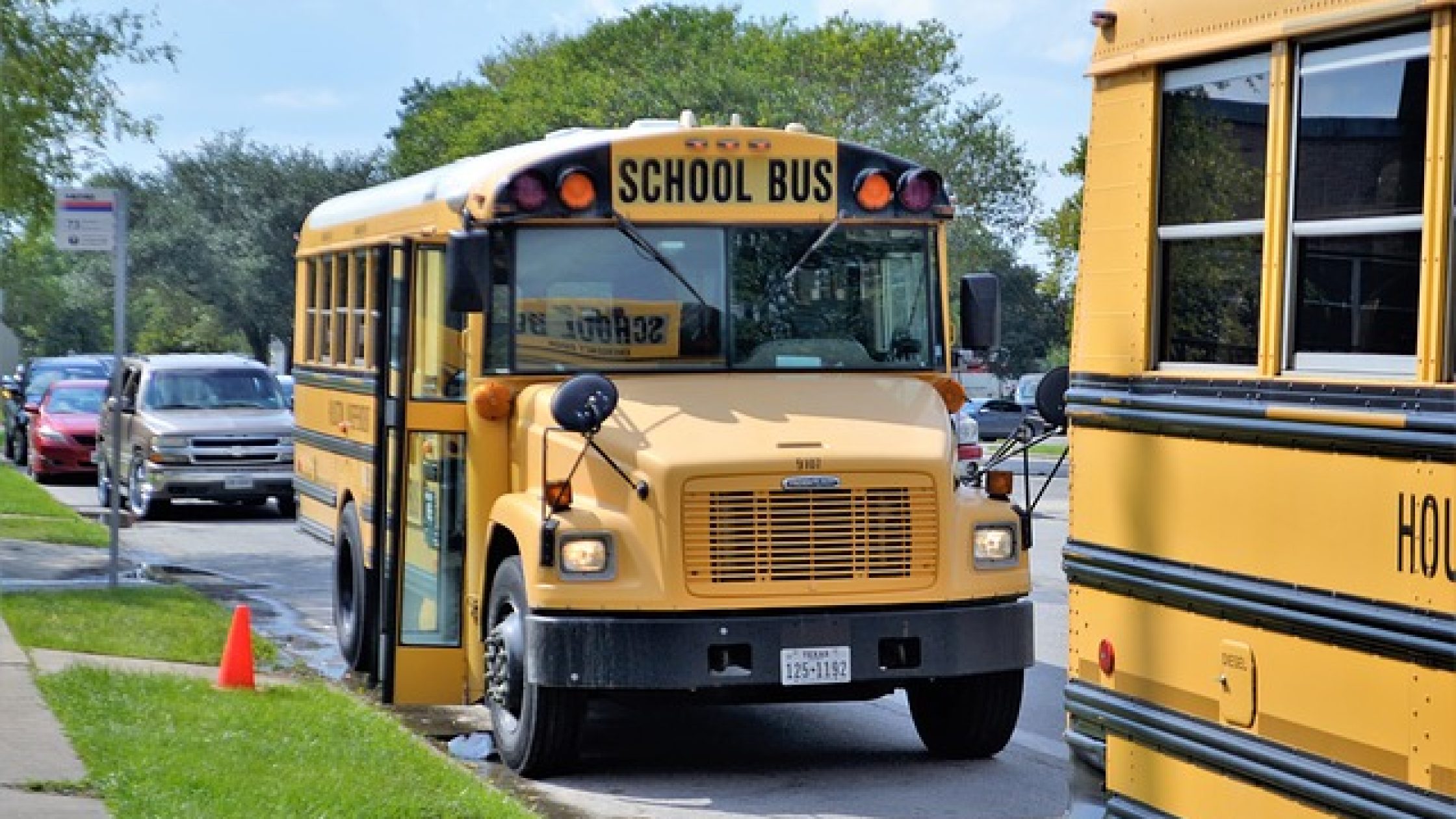
Designate a separate area for school buses. Mixing buses with parent drop-off traffic is a leading cause of congestion. A dedicated bus zone keeps both lanes moving more efficiently.
3. Adequate lane length.
Size your lane for peak-hour volume. A drop-off lane that is too short creates backups that spill onto surrounding streets. Design for your busiest window, not your average one.
4. Crosswalk-free student paths.
Eliminate traffic crossings for students. Students should be able to walk directly from the drop-off curb to the school building without crossing any active traffic lanes.
5. Distinct zones for each traffic type.
Create distinct zones for every traffic type. Separate areas for cars, buses, bicycles, and pedestrians minimize conflict points and reduce the risk of accidents.
6. Priority for Carpools
Reducing traffic is key to safer travel to school for everyone. That’s why innovative schools like Santa Margarita in California are creating incentives for those families that carpool: to encourage carpooling, SMCHS introduced a priority drop-off lane, informally described as a “lightning line,” inspired by nearby Disneyland’s expedited access model. Families who register with GoKid and report their carpools receive a car hang tag, allowing them to enter the faster drop-off lane. Read how they did it.
It has far exceeded our expectations. We didn’t expect more than 20% [of families] to be interested. It has helped our traffic situation, the hang tags for faster drop-off have been appreciated, and parents are incentivised to put an extra kid or two in their cars.
–Ms. Evers, Santa Margarita School.
How Do You Implement a Successful School Drop-Off Zone?
A successful drop-off zone requires clear signage, visible markings, and staff presence during peak hours. Good design is the foundation, but consistent execution is what keeps it running smoothly.
- Start by marking your drop-off zone with highly visible paint and signage so parents always know where to go.
- Use your school’s open house to walk families through drop-off rules and procedures before the school year begins. This is a natural opportunity to answer questions and address concerns before they become day-one problems.
- Get Parents and students involved in drop-off safety with clear communication and community involvement.
- Implement the AAA School Safety Patrol Program. This is one proven approach that trains student volunteers to help direct peers safely during drop-offs and pickups while building broader traffic safety awareness.
Using this foundation, you can have a safety initiative that benefits the whole school community.
What Are the Best Strategies to Reduce School Drop-Off Congestion?
The most effective congestion-reduction strategies combine clear policies, visible communication, and community habits like carpooling. Here is what works:
- Set and enforce clear drop-off rules. Policies like no double parking, no line cutting, and keeping parents in their vehicles during drop-off keep the line moving and reduce conflict between families.
- Publish your drop-off policy on the school website. A map and overview of drop-off procedures ensures every family arrives knowing exactly what to do, reducing confusion during peak hours.
- Station staff at the drop-off zone during peak hours. A visible staff presence to guide students and direct traffic during the busiest arrival and dismissal times can significantly cut delays.
Encourage carpooling among school families. When one parent drives two or three kids, that removes one or two cars from the drop-off line every single day, reducing both congestion and emissions. Best of all? It also saves parents gas.
How Can Carpooling Reduce Traffic in Your School Drop-Off Zone?
Carpooling is one of the highest-impact, lowest-cost steps a school can take to ease student transportation pressure. Fewer cars in the drop-off lane means faster pickups, less traffic congestion on surrounding streets, and a safer environment for students.
GoKid’s carpool platform makes it simple for school families to find nearby neighbors, schedule carpools, and stay coordinated throughout the school year, and it is completely free for families. The school dashboard gives administrators a clear view of how many families are using GoKid and how many active carpools exist at any time.
As a student transportation solution, GoKid helps schools:
- Reduce drop-off congestion by increasing the number of families sharing rides each day.
- Support families affected by the bus driver shortage with a reliable, community-based alternative.
- Build a more connected school community by making it easy for nearby families to coordinate around a shared need.
Ready to bring GoKid to your school? [Get started here.]