

A thoughtful rollout leads to nearly 60% family participation, reduced congestion, and improved collaboration with city officials – within four months.
When Santa Margarita Catholic High School (SMCHS) began planning for the 2025-26 school year, transportation was at the top of the list of priorities. With approximately 1,800 students and a culture that values efficiency and service, something needed to be done to address traffic congestion and carpool needs that had outgrown its tools. By fall 2025, SMCHS had not only launched GoKid’s school carpooling program—it had surpassed expectations in adoption, improved daily operations, and strengthened its standing with the surrounding community.
A familiar challenge, growing more urgent
Based in Rancho Santa Margarita in Orange County, California, SMCHS had relied on a combination of three bus routes and an informal Facebook carpool group. While helpful, neither solution was sufficient.
Sammer Darwazeh, Assistant Principal for Campus Life, who took over responsibility for transportation, recognized the limits of the status quo:
- The Facebook carpool group was difficult to moderate, inefficient, and ill-equipped for school-wide coordination.
- Buses helped, but routes were limited.
- School traffic congestion affected not only families, but also nearby neighborhoods—becoming a regular topic in conversations with Rancho Santa Margarita officials.
The school began exploring all options, including adding additional bus routes. At the same time, leadership recognized that carpooling – if done well – could relieve traffic and improve the daily experience for families.
Exploring a more intentional approach
In February 2025, SMCHS reached out to GoKid and engaged in two exploratory meetings to understand what a modern, school-supported carpool program could look like in practice. By May, a decision was made to move forward and a thoughtful plan was in place.
Several principles guided the decision:
- Risk management: The school entered a three-year agreement with an exit clause that could be exercised after Years 1 and 2 if clear success metrics were not met. This secured price certainty while preserving flexibility, allowing the school to try a new solution without overcommitting.
- Focus: The initial rollout would prioritize incoming freshmen families and transfer families, where existing school connections were fewer and new routines would have to be established.
- Cultural fit: The program and GoKid team needed to align with the high-service ethos of the school.
Early introduction, clear ownership
SMCHS signed in spring 2025, giving the school months to build awareness before the first day of school.
Key elements of the rollout included:
- Spring announcements to admitted families that included GoKid carpooling as a transportation option.
- “Let’s Chat” summer meetings with new families, where the carpool program was introduced alongside other campus logistics.
- A “Coming Soon” teaser video, requested by the school and created by GoKid to inform families without overwhelming them.
- Regular communications in newsletters and physical signage on campus, supported by GoKid’s communications toolkit.
- Clear sponsorship from Assistant Principal Darwazeh, with execution led by Lori Evers, Parent Liaison, who works closely with admissions and communications.
This internal alignment mattered. Families encountered the program consistently, from trusted school voices, and well before transportation routines were locked in.
A deliberate opt-in strategy
Prior to launching GoKid to families, SMCHS took an opt-in approach:
- Incoming freshman families were notified of the offering.
- During the month of June, interested families were able to opt in, recognizing that GoKid would use family data solely for the purposes of finding and arranging carpools on the school’s private platform.
- These families were included in the initial launch, ensuring a pool of interested carpool candidates.
The program launched in early July – more than a month before school started – giving new families time to connect, communicate, and plan.
To incentivize carpooling, SMCHS introduced a priority drop-off lane, informally described as a
“lightning line,” inspired by nearby Disneyland’s expedited access model. Families who register
with GoKid and report their carpools receive a car hang tag, allowing them to access the faster
drop-off lane.
Results that exceeded expectations
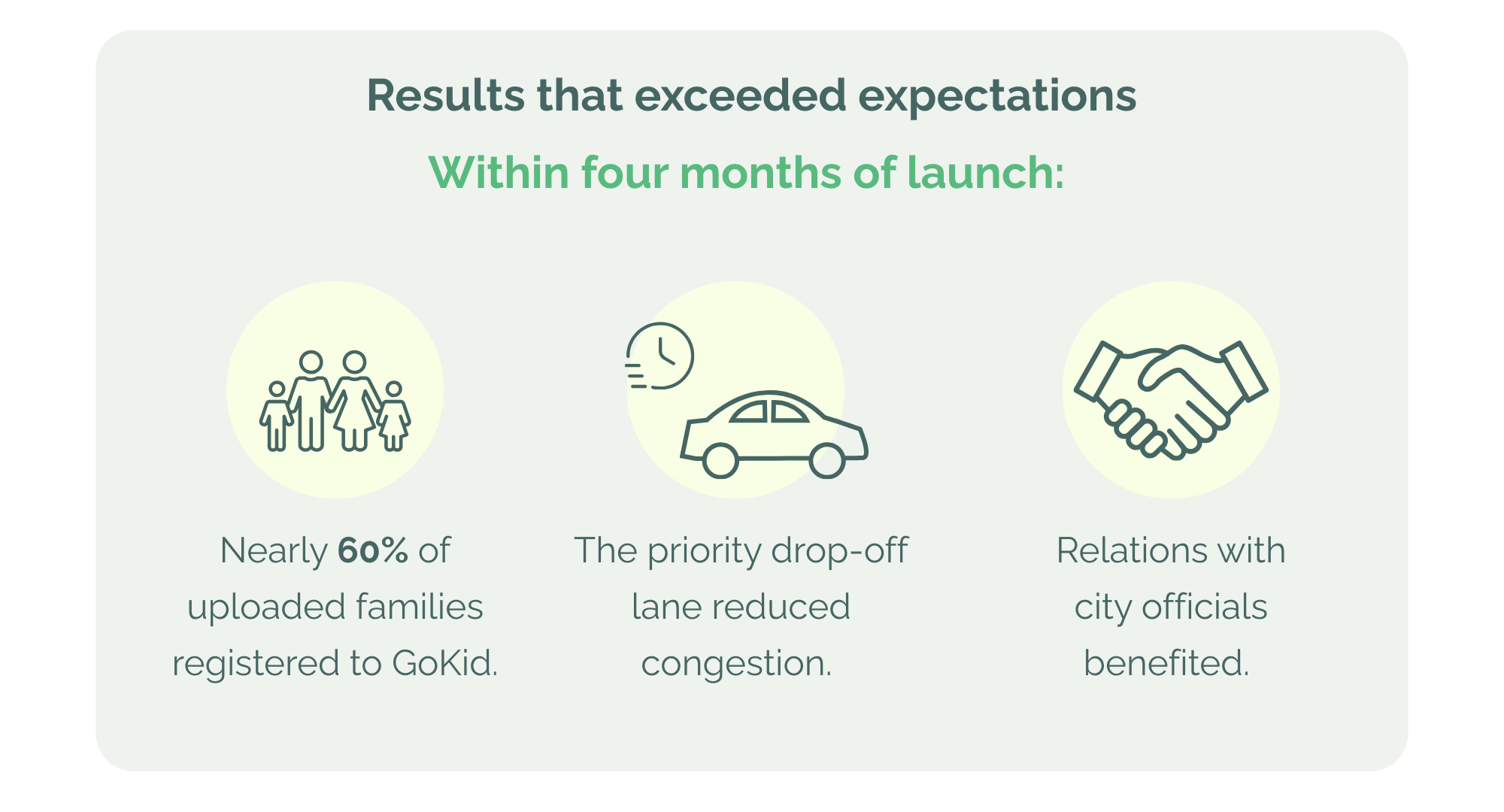
Within four months of launch:
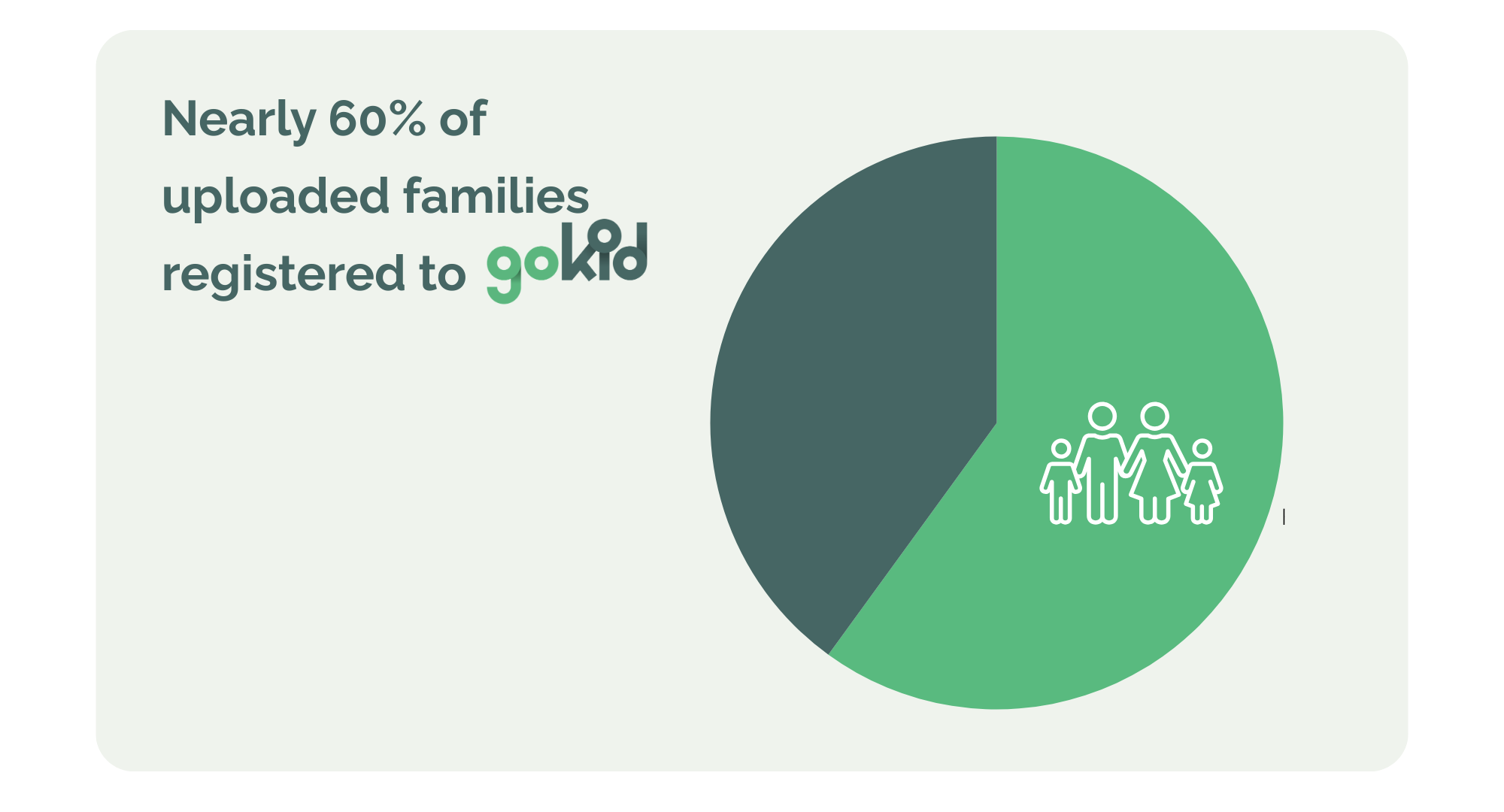
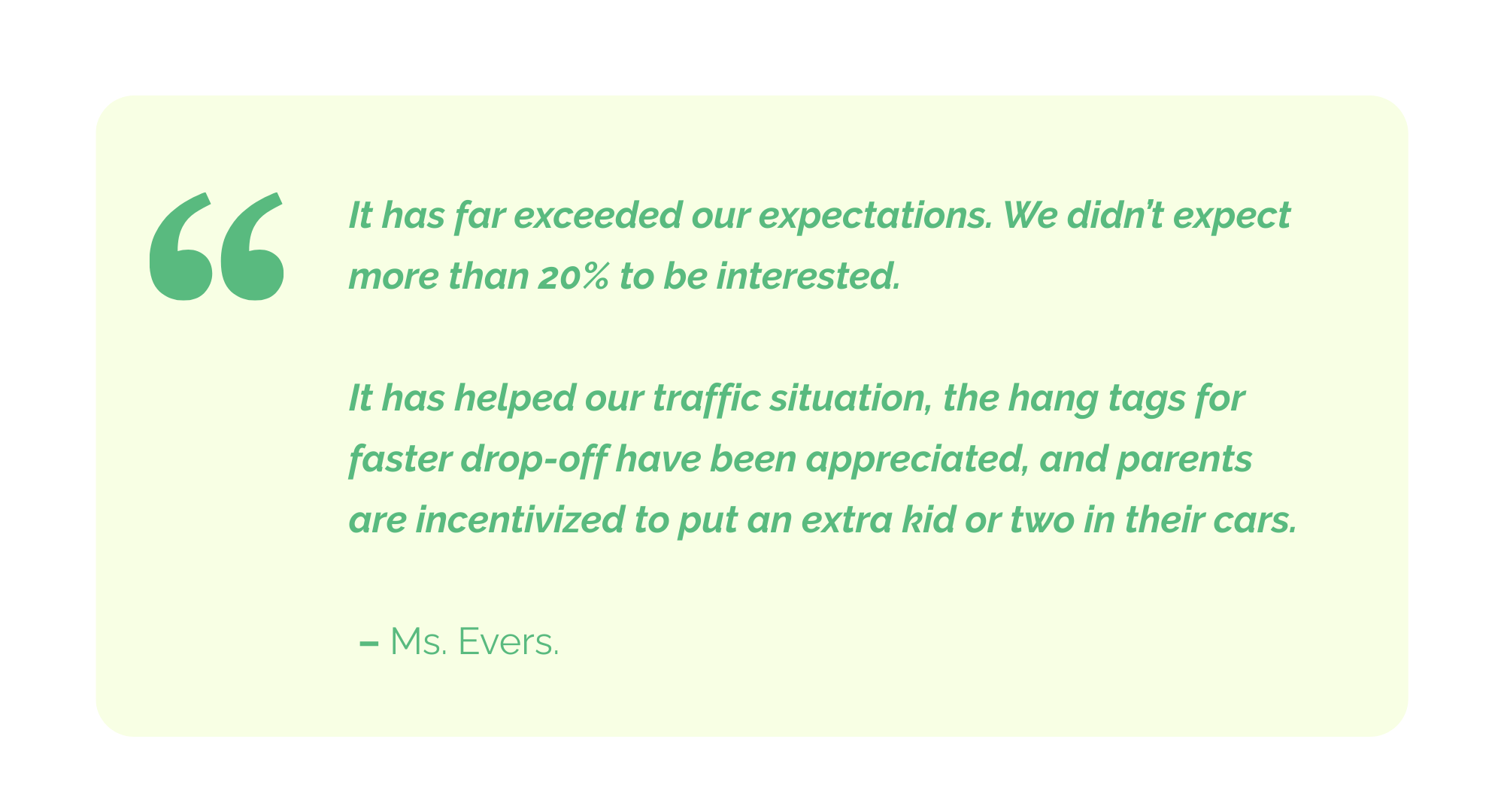
- Nearly 60% of uploaded families registered to GoKid.
- The priority drop-off lane reduced congestion.
- Relations with city officials benefited.
Looking ahead: starting even earlier
Encouraged by early success, SMCHS plans to push the program out even sooner next year. With multiple summer touchpoints for incoming freshmen and transfer students, the school intends to include GoKid carpool information – and physical flyers – at every opportunity.
The lesson from year one is clear: when carpooling is treated as core infrastructure designed to solve specific challenges, families respond.
A roadmap for other schools
Santa Margarita Catholic High School’s experience highlights several transferable best practices:
- Introduce carpooling early, in coordination with admissions and onboarding.
- Assign clear internal ownership.
- Target new families in particular.
- Pair carpooling with incentives that reflect family priorities.
In doing so, SMCHS turned a long-standing challenge into a measurable win—for families, for the campus, and for the broader community