

If you’ve felt that getting students to school has taken more creativity (and patience) than ever, you’re not imagining it. In 2025, the nationwide school bus driver shortage is a little better than last year—but still far from solved, according to the Economic Policy Institute, and the strain continues to fall on districts, schools, families, and drivers.
The national picture: modest progress, persistent gaps
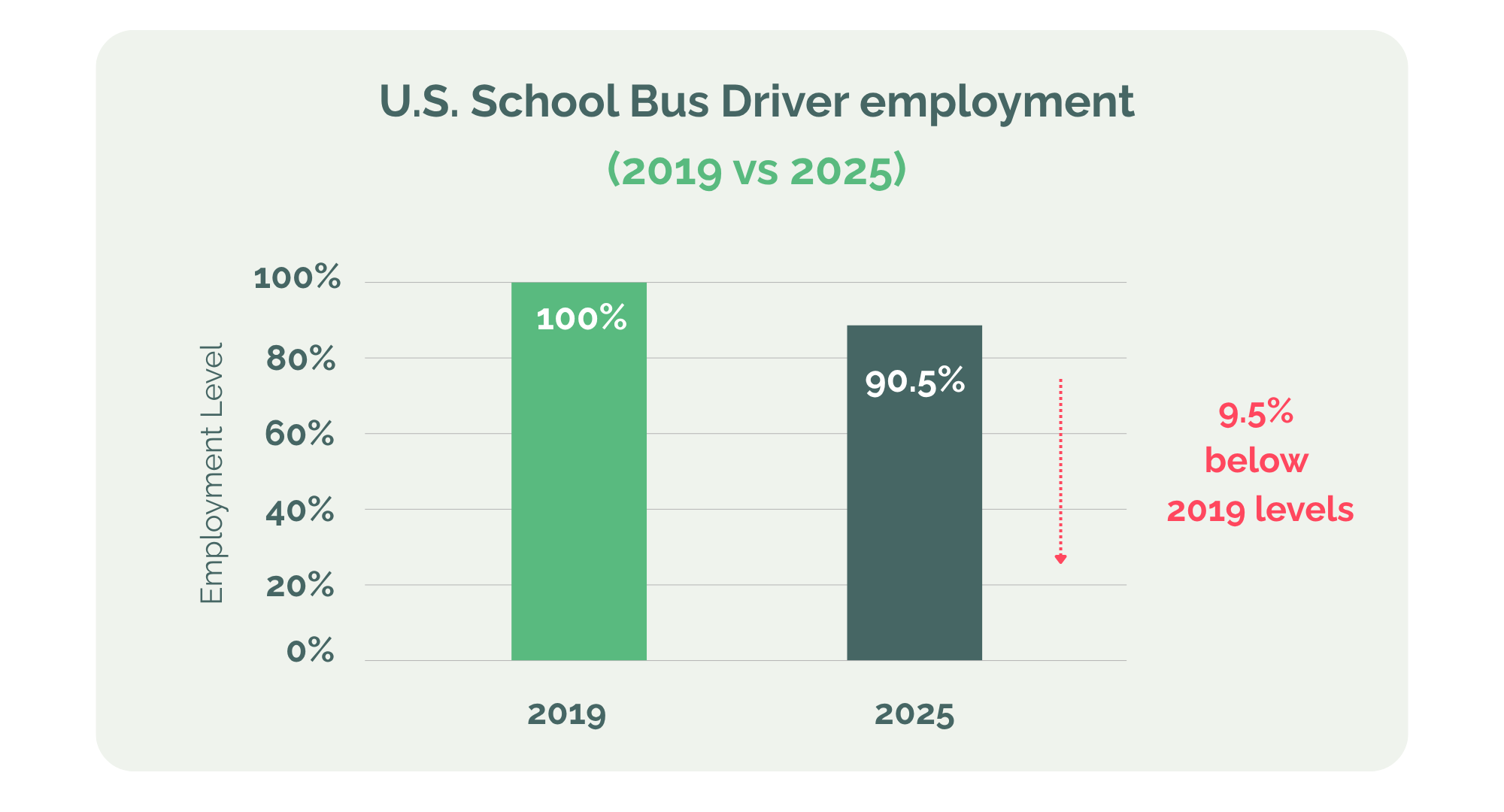
Fresh analysis this week from the Economic Policy Institute finds school bus driver employment is still about 9.5% below 2019 levels, even after modest gains over the past year. Wage growth has helped recruitment somewhat, but districts are grappling with the end of pandemic relief funds and broader education-sector uncertainty. In short: the crisis has eased but not ended.
That tracks with what we continue to see locally across the country—route consolidations, later pickups, and longer ride times—particularly tough for students with special transportation needs and for working parents juggling schedules.
Local realities: the shortage is still real for families
Looking across the country, below are just a few examples of how the workforce shortage is playing out:
- Delays: In Buffalo, NY, parents report ongoing delays and missed buses well into the school year, with families burning through PTO to manage late or absent service, according to a WKBW 7 News Buffalo report.
- Recruiting efforts: Recruiting pushes and training incentives remain common—Massachusetts districts and contractors, for example, are advertising paid training and bonuses to attract new drivers, according to schoolbus.org.
- Regulatory pressure: In Ohio, district obligations to transport private and charter students alongside public school students—amid voucher expansion—have intensified route loads, leaving some high schoolers without district busing and forcing districts to offer transit passes or payments instead of service, as reported by AP News.
These aren’t isolated examples; they reflect a pattern that national surveys and industry groups have flagged, with many operators still reporting “severe” shortages and staffing below expected levels, reports yellowbuses.org.
Hawaii: A real-world example of new approaches
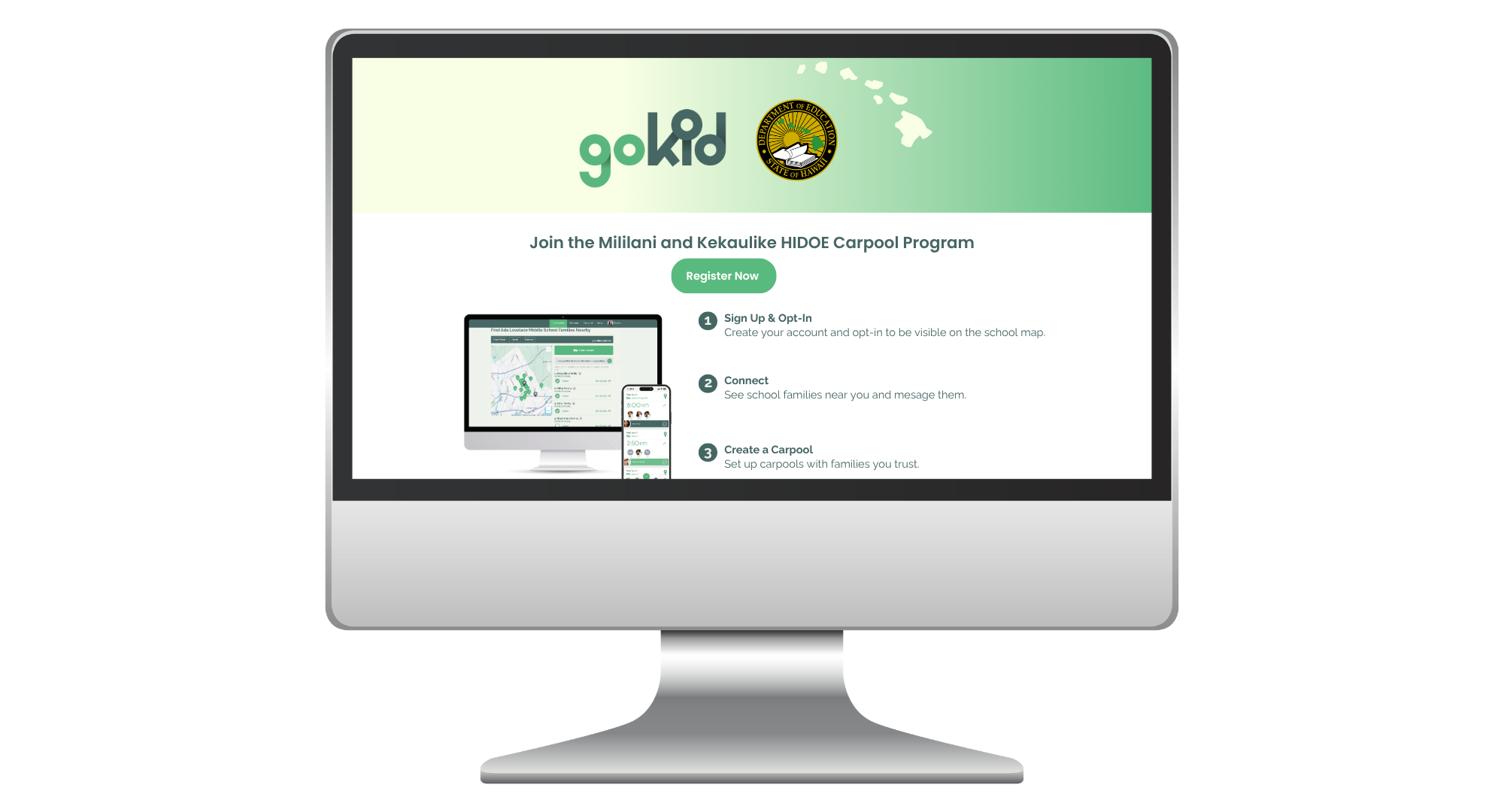
Hawaii offers a useful lens on both the challenges and the willingness to try new ideas. In 2025, the Hawai‘i Department of Education announced a pilot giving families at 14 schools access to GoKid’s school carpooling platform for the 2025–26 school year—an option meant to ease bus driver shortages and reduce campus congestion.
“By partnering with GoKid, we’re supporting families without access to bus service and helping ease traffic and congestion around our campuses,” said Hawai’i Department of Education Superintendent, Kieth Hayashi.
What seems to be helping
Districts and operators aren’t standing still. Common tactics include:
- Raising pay and offering bonuses/training. Better wages and paid licensure are helping recruitment in some markets.
- Route redesign and bell-time shifts. Consolidating stops and adjusting school schedules can reduce the number of simultaneous runs—but often at a cost to family convenience.
- Layered transportation models. For students who can’t be served by a traditional yellow bus —because of distance, budget, or driver shortages—districts are piloting parent-driven carpool programs, transit partnerships, or stipends. Ohio’s “payment in lieu” and transit-pass approaches are one current example; Hawaii’s carpool pilot is another.
Where carpooling fits
Parent-organized carpools aren’t a silver bullet—but they can supplement school buses. Designed responsibly, they can:
- Bridge gaps when routes are cut or limited.
- Reduce the burden on parents, especially for families just outside bus eligibility zones.
- Lower traffic at drop-off/pick-up, easing congestion around campuses.
Key ingredients for a district-supported carpool program include:
- Strong privacy and safety features (verified school parents, invitation controls, and clear conduct policies).
- Double opt-out enrollment with robust onboarding and customer support.
Hawaii’s 2025 pilot illustrates how districts can formally offer carpooling as one option in a broader toolkit—alongside recruiting, route optimization, and special-program transport—without asking schools to manage carpools themselves.
Looking ahead to 2026
The shortage’s trajectory will depend on continued wage competitiveness, stable funding, and practical policy updates that reflect today’s enrollment patterns and service mandates. Even as hiring inches up, communities are likely to keep layering solutions—with carpooling, public transit partnerships, and targeted stipends filling in around core bus service—so students can reliably reach the classroom.
Sources (public news & reports)
- Economic Policy Institute (Nov 3, 2025): The school bus driver shortage has improved slightly but continues to stress K–12 public education. Economic Policy Institute
- Hawai‘i State Department of Education (July 31, 2025): HIDOE partners with GoKid to pilot carpooling option for school families. Hawaii Public Schools
- School Bus Fleet (Aug 15, 2025): Hawaii Pilots Carpooling Platform to Ease Driver Shortage Strain. School Bus Fleet
- Hawai‘i Public Radio (Sept 3, 2025): School bus offerings have improved since last year, but challenges remain. Hawaii Public Radio
- Hawaii News Now (Aug 2, 2025): Parents react to carpool app amid bus driver shortage. https://www.Hawaiinewsnow.com
- WKBW-TV Buffalo (late Oct/early Nov 2025 coverage): Buffalo school bus delays leave parents frustrated. WKBW 7 News Buffalo
- Associated Press (Sept 2025): Thousands of Ohio students left without a school bus ride as private school transport expands. AP News
- National School Transportation Association (July 1, 2024 comment letter summarizing survey): ongoing severity and staffing below expectations. yellowbuses.org
- SchoolBus.org (July 29, 2025): Massachusetts School Districts Are Paying You to Train as a School Bus Driver. schoolbus.org