


Schools can make one of their biggest environmental impacts by implementing a carpooling program.
Every year, Earth Day inspires assemblies, classroom projects, and recycling drives. These efforts matter. But there is a daily action hiding in plain sight that can reduce a school community’s carbon footprint more than almost any other single initiative: inviting more families to share rides to school.
This guide is for school and district administrators who want to turn Earth Day from a one-day event into a year-round environmental win — and make it easy for families to participate.
 For administrators, this is not just an environmental issue; it’s a safety, logistics, and community relations issue.
 While emissions reduction is a primary goal, schools that implement carpooling programs often see broader operational and community benefits.
Why Is School Drop-Off Traffic a Problem Worth Solving?
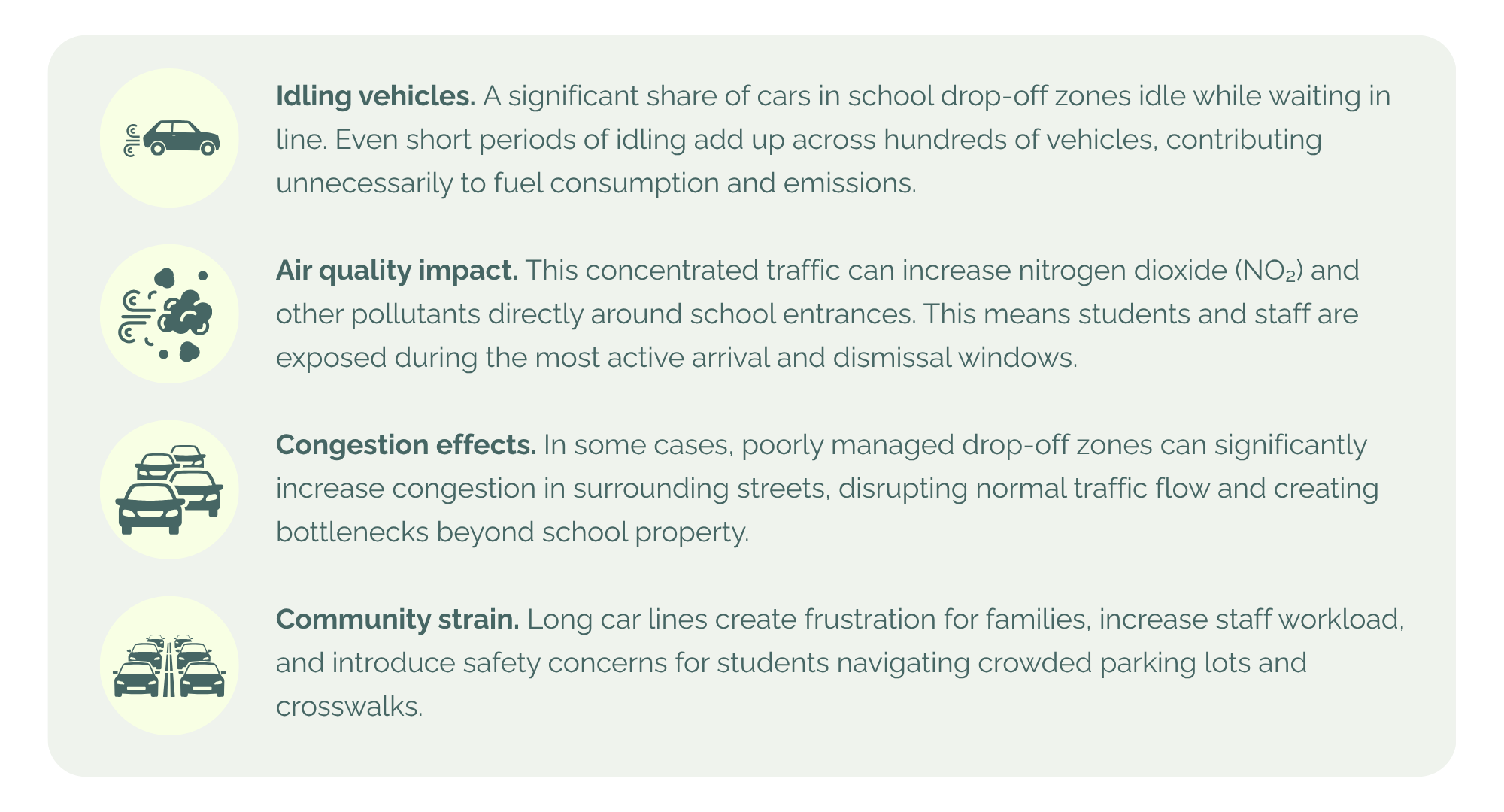
The daily school commute creates a concentrated surge of traffic that has outsized environmental and operational impacts compared to typical neighborhood patterns. School drop-off traffic is one of the most concentrated sources of vehicle emissions in any neighborhood. Key challenges include:For administrators, this is not just an environmental issue; it’s a safety, logistics, and community relations issue.
How Much CO₂ Does School Transportation Produce?
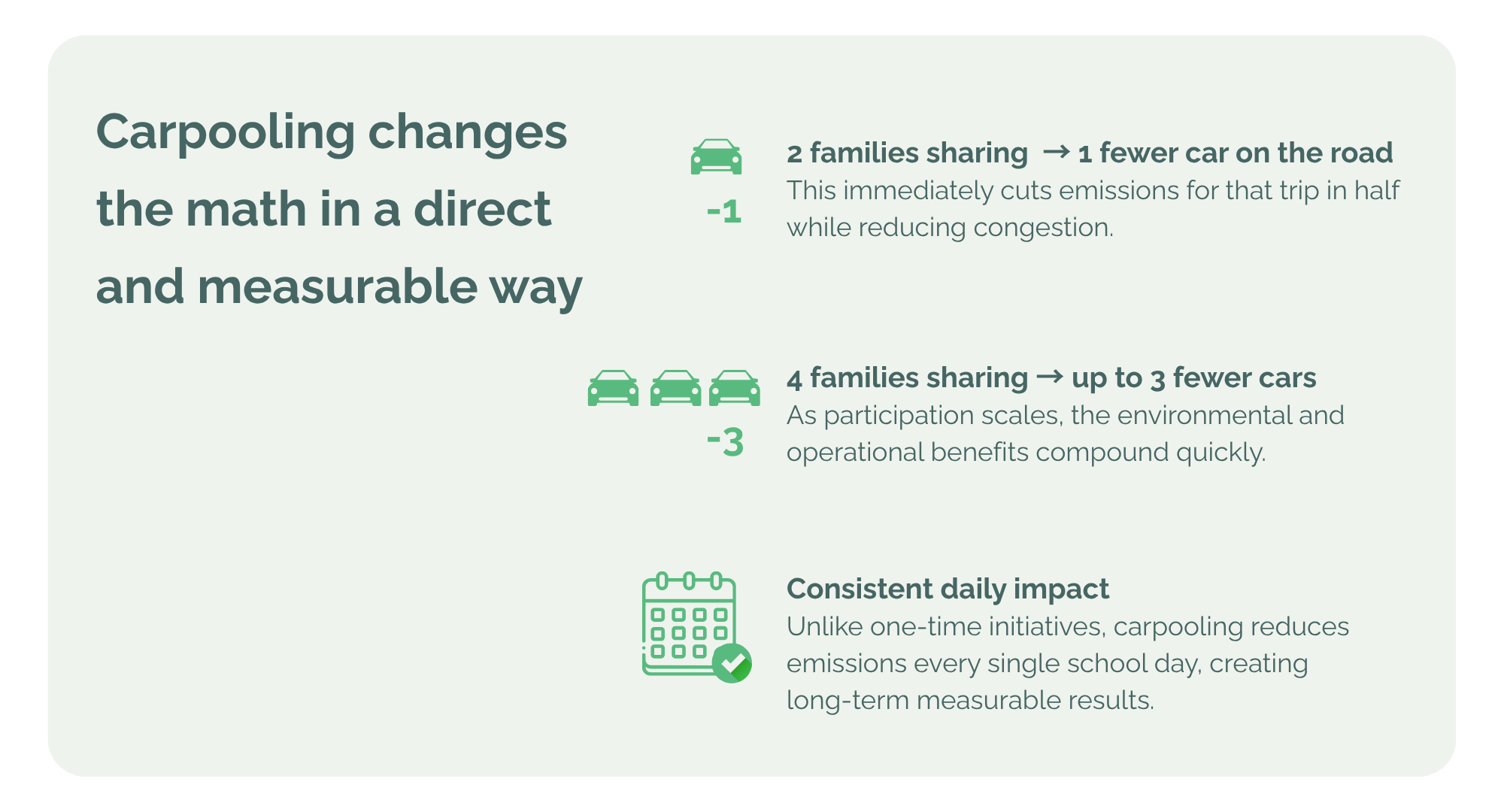
While individual car trips may seem small, the cumulative impact of daily school transportation across hundreds of families is significant. A typical passenger vehicle emits about 4.6 metric tons of CO₂ per year (U.S. EPA), and school commutes represent a consistent portion of that usage. For a school with 400 families making daily drop-offs and pickups, the cumulative emissions add up quickly, especially when most trips involve single-occupancy vehicles.Carpooling changes the math in a direct and measurable way:
- 2 families sharing → 1 fewer car on the roadThis immediately cuts emissions for that trip in half while reducing congestion.
- 4 families sharing → up to 3 fewer carsAs participation scales, the environmental and operational benefits compound quickly.
- Consistent daily impactUnlike one-time initiatives, carpooling reduces emissions every single school day, creating long-term measurable results.
Real-world example
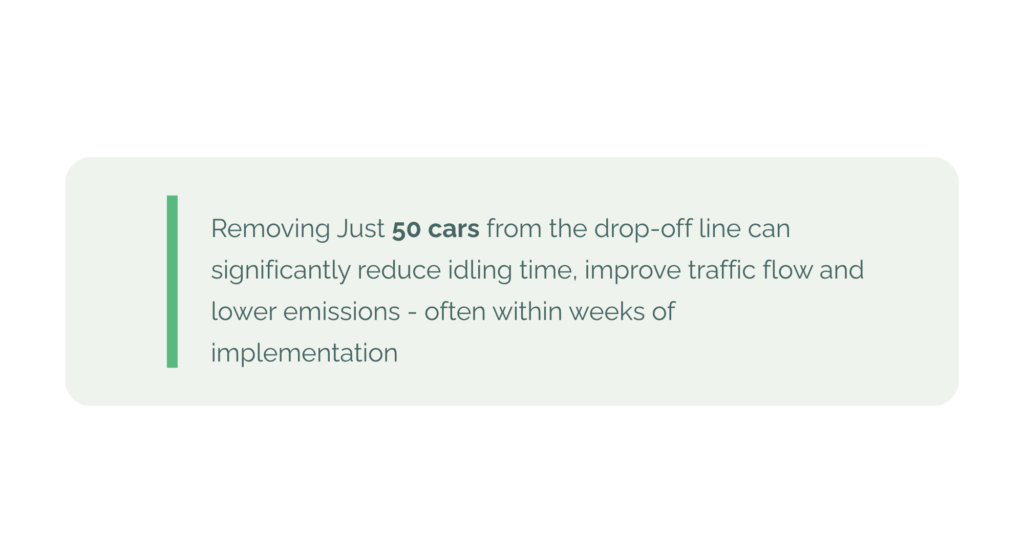
At a mid-sized school, removing just 50 cars from the drop-off line can significantly reduce idling time, improve traffic flow, and lower emissions — often within weeks of implementation.
Why Should Schools Organize Carpooling?
The biggest obstacle to carpooling isn’t willingness, it’s logistics. While many families are open to carpooling, most do not initiate it on their own due to coordination and trust barriers. Parents often don’t:- Know which families live nearby or share similar schedules
- Feel comfortable coordinating with unfamiliar drivers
- Have time to manage communication and planning
- A built-in, trusted community of families
- Access to enrollment and location data
- Established communication channels
There’s also an equity benefit to consider:
- Transportation access: Carpooling can support families without consistent access to a vehicle.
- Schedule flexibility: Shared driving responsibilities help working parents manage time constraints.
- Inclusive participation: A structured program ensures more families can participate — not just those with existing social connections.
What Are the Benefits Beyond Emissions?
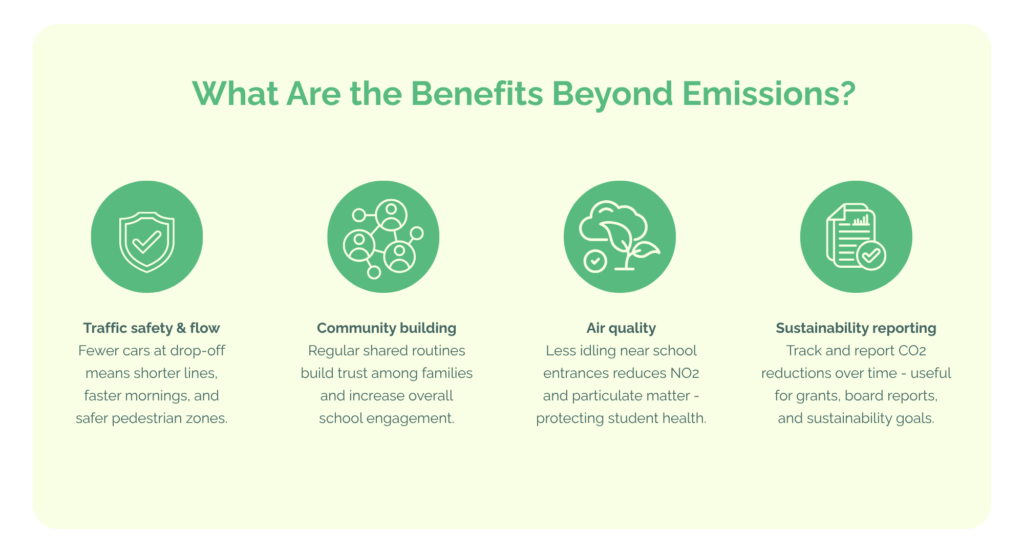
While emissions reduction is a primary goal, schools that implement carpooling programs often see broader operational and community benefits.
Traffic Safety & Congestion
Reducing the number of vehicles during arrival and dismissal has immediate safety and efficiency benefits.- Faster drop-off flow: Shorter lines reduce wait times and improve morning routines for families.
- Safer environments: Fewer cars mean less crowding near entrances, improving visibility and pedestrian safety.
- Reduced spillover traffic: In some cases, organized transportation strategies can reduce surrounding congestion by up to ~30%, easing pressure on nearby roads.
Air Quality
Improving air quality around school grounds directly impacts student and staff well-being.- Reduced idling emissions: Fewer cars in line means less buildup of pollutants near entrances.
- Healthier school environment: Lower exposure to nitrogen dioxide and particulate matter supports respiratory health, particularly for younger children.
Community Building
Carpooling creates consistent, low-friction interactions between families.- Stronger relationships: Regular shared routines help build familiarity and trust among families.
- Increased engagement: Families who feel connected to the school community are more likely to stay involved and participate in school initiatives.
Sustainability Reporting
Carpooling provides measurable, reportable outcomes that support institutional goals.- Trackable CO₂ reductions: Schools can quantify environmental impact over time.
- Participation metrics: Data helps administrators demonstrate adoption and success.
- Useful for reporting: Supports sustainability plans, grant applications, and board-level communications
How GoKid Makes Carpooling Easy for Schools
Even with strong interest, successful carpooling programs require the right tools and structure to scale effectively. GoKid is a carpooling platform designed specifically for K–12 communities. Key features include:- Secure, school-based network: Only verified families within the school community can participate, ensuring safety and trust.
- Automated matching: Families are matched based on location, grade level, and schedule — eliminating manual coordination.
- Admin visibility and control: Schools can monitor participation, manage the program, and access reporting tools through a centralized dashboard.
- Built-in communication tools: Messaging stays within the platform, reducing reliance on personal contact information or group texts.
- CO₂ impact tracking: Schools receive data on emissions reduction, supporting sustainability goals and reporting.
- Fewer emissions
- Less congestion
- A stronger school community